BLOG – March 24, 2026

How to Prepare for the Vallée Blanche Ski Descent in Chamonix ?

What Is the Vallée Blanche Ski Descent?

The Vallée Blanche is a world-famous off-piste glacier ski descent of around 20 km, with nearly 2,000 metres of vertical drop. The route follows a constantly shifting glacier, scarred by crevasses and towering seracs, offering a true high-mountain skiing experience.
There are no marked runs, no piste grooming, and no artificial safety features—this is authentic off-piste skiing in its purest form. The Vallée Blanche is accessible to intermediate to advanced skiers, but always with a qualified mountain guide due to the complexity and real risks of glacial terrain.
Chamex offers guided Vallée Blanche ski descents from mid-January to March, depending on snow and weather conditions.

How to Prepare for Off-Piste Skiing: Avalanche Awareness & Crevasse Rescue Skills

To build your skills on glaciated terrain, Chamonix Experience offers crevasse rescue courses, as well as introductory avalanche awareness and avalanche rescue training. These programs help skiers understand glacier hazards, improve safety, and gain confidence for off-piste adventures.
The Vallée Blanche descent is long and demanding, so it’s essential to remain calm in the high-mountain environment. Good physical fitness is required to cope with several hours of off-piste skiing in variable snow.

Why ski the Vallée Blanche with a mountain guide?

Glaciers flow slowly like rivers, constantly reshaping the terrain. The Vallée Blanche glacier changes throughout the season and from year to year. Crevasses shift, seracs move, and routes can vary daily. Without expert knowledge of the glacier, these changes create significant risks for skiers.
A certified high-mountain guide reads the glacier, adapts the route to current conditions, and uses ropes when needed. Guides also manage avalanche hazards and ensure the group’s safety throughout the descent.
Chamex offers guided Vallée Blanche ski experiences in small, personalized groups. Our guides are highly qualified experts in the Mont Blanc massif, and each outing includes a careful analysis of weather and snow conditions. The approach is focused on safety, educational, and never rushed, allowing skiers to fully enjoy this legendary off-piste route with confidence.


When to do the Vallée Blanche? When is the best time?

The ideal period is from mid-January to April. There is usually enough snow, the days get longer and the snow conditions are varied but favourable. Outside this period, the lack of snow can expose rocky areas and make it difficult, if not impossible, to ski down. The weather remains a determining factor, as the wind on the Aiguille du Midi and visibility are monitored every morning before any outing.
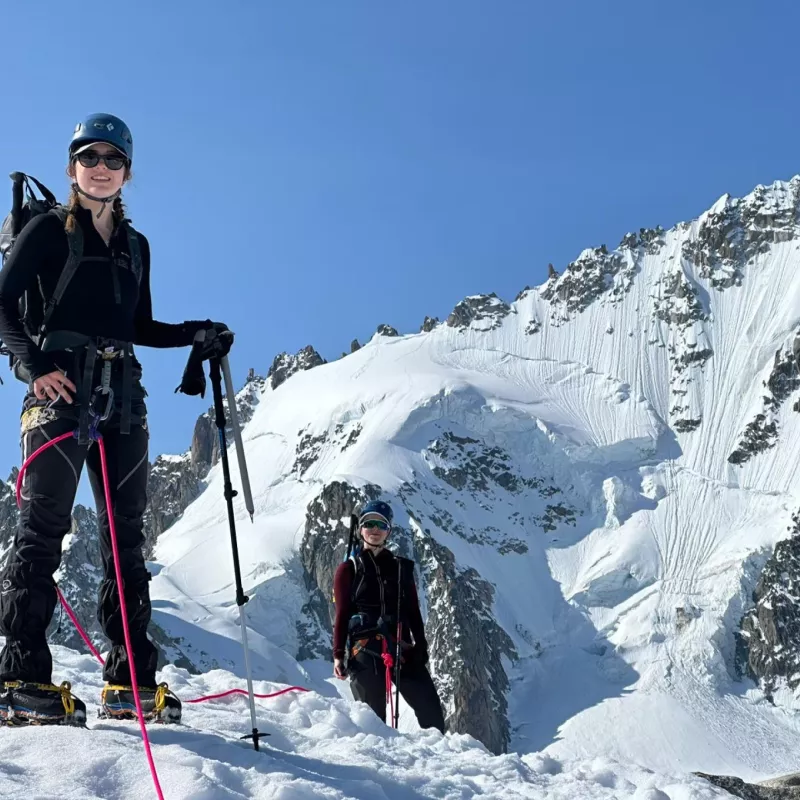
In summer, it is possible to do the glacier hike between the Aiguille du Midi and Pointe Hellbronner. The Vallée Blanche Traverse is possible between May and November.


What equipment do I need to ski the Vallée Blanche?

Wide, stable skis suitable for off-piste skiing, ski poles (or a snowboard). Safety equipment: harness, avalanche transceiver, shovel, probe and ski helmet. Full avalanche safety
equipment (avalanche transceiver, shovel, probe) is compulsory. Crampons are required for descending the ridge. Bring technical clothing suitable for high mountain conditions, sun cream, water and energy food to last the duration of the descent. You’ll find all the equipment you need on the activity sheet provided by Chamex.

How to Prepare Physically for the Vallée Blanche Ski Descent

Physical preparation is essential for a safe and enjoyable descent of the Vallée Blanche. Regular cardio training forms the foundation, while strengthening your legs, especially thighs, calves, and core muscles is crucial for absorbing the impact of a long off-piste descent.
Getting your body accustomed to off-piste skiing before arriving in Chamonix is highly recommended. Booking an introductory course in off-piste skiing course can help improve technique and confidence on varied snow conditions. Finally, remember the altitude: skiing at 3,800 m requires more effort than a typical resort, so gradual acclimatization and good physical conditioning are key.

Frequently Asked Questions About the Vallée Blanche Ski Descent

How far is the Vallée Blanche ski descent?

The classic Vallée Blanche route is approximately 20 km long, starting from the Aiguille du Midi cable car and finishing at Montenvers, with a vertical drop of around 2,000 meters.

Is the Vallée Blanche suitable for snowboarders?

The Vallée Blanche is suitable for snowboarders, but only for those with expert-level riding skills. The “easy” route, which is manageable for intermediate skiers, is relatively flat, making it very challenging for snowboarders—especially in deep fresh snow.
Snowboarders typically need to take the steeper variants, which often wind between crevasses, requiring full control and confidence. Sections such as snow bridges are particularly demanding, where falling could be dangerous.

At the end of the descent, there is a long flat section. Snowboarders must use ski poles to push along, as taking the board off and walking across the glacier is not an option. For safety and efficiency, riding with a professional guide is strongly recommended.

What Kind of Skis Are Suitable for the Vallée Blanche?

For the Vallée Blanche, all-mountain skis are generally suitable, especially when the snow is compacted or groomed by wind and previous skiers.
However, on powder days or after fresh snowfall, the snow can be deep and variable. In these conditions, wide skis with over 100 mm underfoot are strongly recommended to provide better flotation, stability, and control on glacial terrain. Choosing the right skis ensures a safer and more enjoyable off-piste experience.

Can you ski all the way to the center of Chamonix?

It is increasingly rare to have enough snow to ski past the Montenvers bottom station. On exceptional snow years, the descent can continue via the Buvette des Mottets and the forest track, but conditions must be carefully assessed.

Can children ski the Vallée Blanche?

Skiing with children is possible, but only under the guidance of an experienced mountain guide. Teenagers must have sufficient skiing ability, off-piste experience, and stamina to safely complete the descent.

How much does a guided Vallée Blanche descent cost?

Chamex organizes the descent with a certified guide. Groups of up to 4 people per guide are recommended. The price includes essential safety equipment: harness,
avalanche transceiver, probe, and shovel. Additional equipment can be rented or purchased separately. The ascent of the Aiguille du Midi and the descent of the Montenvers train are included with the Mont Blanc Unlimited ski pass, which is usually more cost-effective than buying individual tickets.

Conclusion

The Vallée Blanche is a unique off-piste experience and part of the world’s Alpine heritage. To enjoy it safely, skiing with a professional guide is the best choice. Chamex guides accompany you down the glacier, providing expertise, safety, and insights along the way.
If off-piste skiing isn’t for you, the Vallée Blanche can also be explored by glacier trekking, walking across the glacier with a guide for a safe and unforgettable high-mountain adventure.