What Is the Haute Route? A Brief History
The Haute Route’s story began in the late 19th century, not with skis, but with alpinists on foot. In 1861, members of the English Alpine Club traced a summer mountaineering path between Chamonix and Zermatt, calling it the “High Level Route.” The ski touring version came later — in 1911, a group of hardy Swiss alpinists completed the first winter crossing on skis, marking the birth of one of the most famous ski tours in the world. Over the decades, improvements in equipment, navigation, and hut infrastructure transformed the Haute Route from an extreme expedition into an attainable dream for skilled ski mountaineers.
Itinerary Options: Classic, Verbier Variation & More
There are several well-known variations of the Haute Route, each with its own character and challenges:
- Classic Haute Route
Goes via Argentière Glacier, Champex, and Cabane de Dix. - Verbier Variation
Slightly less technical, passing through Verbier. This is the most popular variation. - Grande Lui Variation
Also called the pure Haute Route, this option involves no taxi transfers or ski lifts, making it a more remote and adventurous alpine experience. - Reverse Haute Route
Starting in Zermatt and finishing in Chamonix; steeper climbs and more challenging ascents.

How Difficult is the Guided Haute Route Ski Tour?
This is not a casual ski holiday — the Haute Route is a demanding high-altitude journey that requires a good level of fitness, strong technical ability, and experience in varied backcountry conditions.
Physical Challenge
Expect 6–8 hours of movement per day, with 1,000–1,300 meters of ascent and long descents carrying a 7–10 kg backpack. The fitter you are, the more you will enjoy the experience.
Technical Challenge
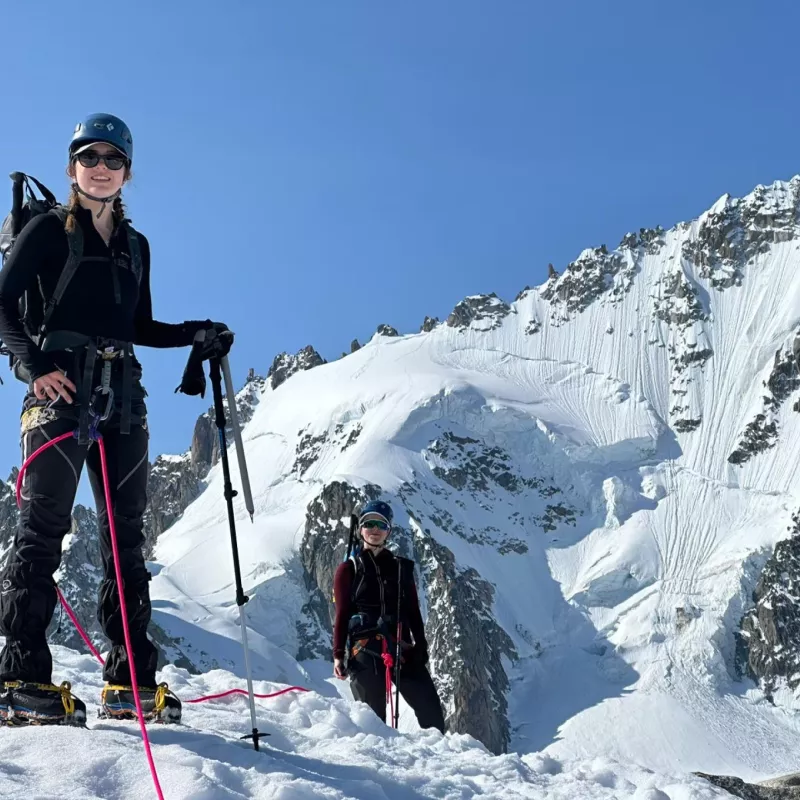
You will travel across glaciers, climb steep cols, and sometimes use crampons and an ice axe. Efficient skinning technique is essential, particularly for firm, wind-blown tracks or steeper kick-turn sections. Ideally, you will have completed at least one multi-day hut-to-hut tour, but experienced ski tourers with strong day-touring backgrounds and excellent off-piste skills will cope well.
Skiing Ability
Conditions on the Haute Route change rapidly — from firm wind crust to deep powder. You need to be a confident off-piste skier, capable of skiing challenging mixed terrain with a backpack. With the right preparation, strong intermediate off-piste skiers can complete the guided Haute Route ski tour successfully.
Altitude
Many sections are above 3,000 meters. High altitude can reduce physical performance, strength, and overall well-being, and it may cause significant discomfort for some people. Proper acclimatisation is strongly recommended, especially if you are arriving from sea level.

How to Prepare for the Haute Route
Training & Conditioning
Start preparing months in advance to ensure you are physically and technically ready:
- Endurance Training
Build stamina with ski touring, cycling, or running over several months. - Strength Training
Focus on legs, core, and back to handle long climbs with a pack. - Ski Technique
Practice off-piste skiing with a charged backpack in all snow types to simulate real conditions. If you’re unsure about your off-piste skills, we offer off piste progression ski courses designed to help you progress and build confidence in challenging terrain. - Ski Touring skills
Learn efficient kick turns and how to use ski crampons, crampons, and an ice axe. Our Introduction to Ski Touring course, Ski Tourin Progression course or Ski Mountaineering course are good preparation courses for the Haute Route. - Multi-Day Practice
Do back-to-back day tours to replicate fatigue and recovery.
Choosing the Right Equipment
On the Haute Route, lightweight and reliable gear is key. Every extra kilo feels heavier at altitude.
- Skis
80–95 mm underfoot for stability and flotation without excessive weight. - Bindings
Lightweight tech bindings (e.g., Dynafit, ATK, Plum). - Boots
Touring boots with a good walk mode and enough stiffness for descents. - Safety Gear
Avalanche beacon, probe, shovel, harness, crampons, ice axe, helmet. - Pack
35–40 liters to fit essentials, food, water, and glacier gear.
If you are renting equipment or buying new gear, allow yourself an extra day or two to test it and ensure everything is properly tuned and fully functional before setting off on the Haute Route.

Staying in Mountain Huts on the Haute Route
One of the great pleasures of any hut to hut trip, including the Haute Route ski tour is the experience of staying in high alpine huts. These remote huts allow you to travel light, enjoy hot meals, and share stories with fellow ski – tourers but it’s not luxury. Here’s what to expect:
- Accommodations
Mixed-sex dormitory rooms with bunks, warm blankets, and pillows. Huts do not provide fresh sheets, so bring a sleeping bag liner for personal hygiene. - Water
Limited or no running water; bottled water for drinking must be purchased. - Washing facilities
Washing facilities are limited and generally there is no running water in any of the huts although this may vary in some huts. There are basins in which you can use bottled water to wash the best you can and clean your teeth, but they are NOT generally in private cubicles and are mixed sex. - Toilets
Toilets are generally septic-tank type (non-flushing) and again mixed sex. You need to be prepared for simple living in the huts and appreciate they are located at high altitude and in inhospitable terrain. - Meals
Hearty alpine breakfasts and dinners prepared by the hut guardians, with drinks and snacks available (all supplies are flown in by helicopter, so prices are higher). - Power
Charging options are limited and not guaranteed. Some huts have solar-powered outlets in communal areas, but availability depends on weather and demand. Bring a fully charged power bank, keep electronics warm to preserve battery life, and use airplane mode to save power. - Connectivity
There is no Wi-Fi in the huts, and mobile coverage is very limited or nonexistent.
Hut Etiquette:
- Remove boots and technical gear in the foyer.
- Wear provided slippers indoors.
- Keep your gear tidy and ready for early starts.
- Bring earplugs for shared sleeping spaces.

Why Choose a Guided Haute Route Ski Tour?
A certified IFMGA mountain guide will handle route planning, glacier safety, hut bookings, and daily decision-making based on weather and snow conditions. This lets you focus on enjoying the skiing, learning alpine skills, and making the most of your energy each day.
Final Thoughts
The guided Haute Route ski tour is more than just a ski trip — it’s a rite of passage for ski mountaineers. You’ll travel through landscapes steeped in alpine history, push your physical and technical limits, and finish in the shadow of the Matterhorn with a deep sense of achievement. Whether you’re drawn by the challenge, the scenery, or the culture, this is one journey that will stay with you forever.